- Red-throated Diver
- Little Grebe
- Great-crested Grebe
- Northern Gannet
- Great Cormorant
- Grey Heron
- Great Egret
- Mute Swan
- Greylag Goose
- Eurasian Wigeon
- Eurasian Teal
- Mallard
- Tufted Duck
- Common Scoter
- White-tailed Eagle
- Kestrel
- Water Rail
- Coot
- Oystercatcher
- Ringed Plover
- Ruddy Turnstone
- Red Knot
- Sanderling
- Purple Sandpiper
- Dunlin
- Arctic Skua
- Common Gull
- Greater Black-backed Gull
- Lesser Black-backed Gull
- Glaucous Gull
- Herring Gull
- Caspian Gull
- Mediterranean Gull
- Black-headed Gull
- Little Gull
- Sandwich Tern
- Common Tern
- Razorbill
- Common Guillemot
- Stock Dove
- Wood Pigeon
- Collared Dove
- Skylark
- White Wagtail
- Meadow Pipit
- Rock Pipit
- Wren
- Blackbird
- Song Thrush
- Cetti's Warbler
- Blackcap
- European Robin
- Stonechat
- Great Tit
- Blue Tit
- Magpie
- Jackdaw
- Carrion Crow
- European Starling
- House Sparrow
- Chaffinch
- Brambling
- Greenfinch
- Siskin
- Linnet
- Reed Bunting
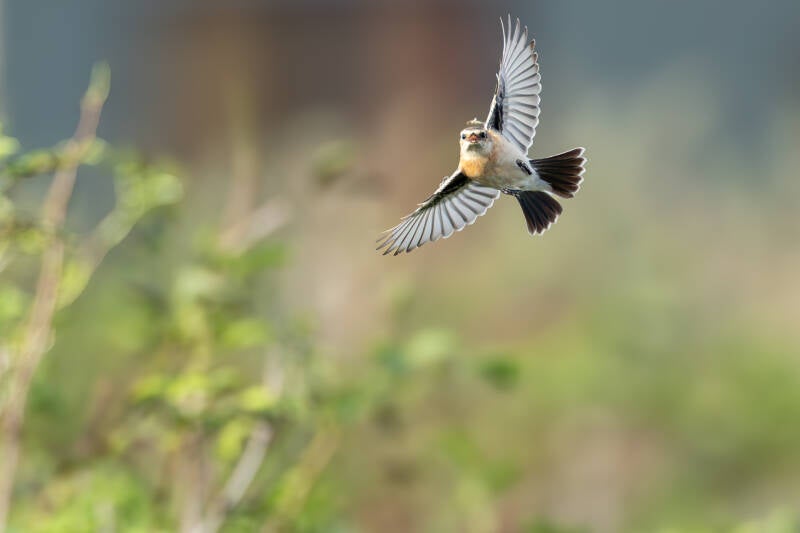
- Siberian Stonechat
Upon arrival at the parking area, the excursion started on a high note with a Cetti’s Warbler—a personal lifer. Moving onto the beach, scanning the gulls yielded an adult Glaucous Gull, which flushed almost immediately as a White-tailed Eagle soared overhead. Several wader species were also active along the shore.
Walking along the pier toward the lighthouse, we quickly encountered our next target species: Razorbill and Rock Pipit. From the seawatching spot at the end of the lighthouse pier, we observed active coastal migration, logging Northern Gannets, Red-throated Divers, additional Razorbills, and three Arctic Skuas. Below the pier wall, Purple Sandpipers and Red Knots were actively foraging, while a Grey Seal made a dramatic appearance, surfacing with a European Seabass.
On the return walk, a report came in of a rare Siberian Stonechat near the parking area. While checking the marina, we found a male Common Scoter. After a focused 20-minute search, the Siberian Stonechat showed exceptionally well, offering great photographic opportunities—a perfect highlight to conclude a successful morning before departing for our flight.